The Last Voice Before Bed: Britain's Vanished Closedown Rituals
Photo: ABC Television, Public domain, via Wikimedia Commons
There was a time when British television didn't simply end. It wound down. It lowered its voice, dimmed the lights and told you, in its own peculiar way, that the day was over. For anyone who grew up with a set that had a dial rather than a remote, closedown wasn't dead air. It was a ritual.
The schedule would thin out, the adverts would stop, and then came the odd little hinterland: a continuity announcer apologising for a technical fault, a short epilogue, a trade-test film, a weather map that looked like it had been drawn by a geography teacher with a grudge. Then the national anthem, a test card, and that high-pitched tone that seemed designed to wake the cat.
Those final minutes are now some of the most hunted fragments of British telly. Not because they were prestigious. Quite the opposite. They were disposable, functional, cheap — and that's exactly why they vanished.
The gentle art of saying goodnight
Closedown television had a strange power. It was telly that knew it was telly. Continuity announcers — often off-camera, often underpaid, occasionally magnificently deadpan — became the last human voice in the room. They'd read a trailer for tomorrow's schedule, apologise for the late change to Panorama, and wish you a pleasant evening in a tone that suggested they too were about to put the kettle on.
ITV regions had their own flavours. A late-night epilogue might be a two-minute thought for the day, a reading, or a short religious slot with the gentle menace of a headmaster's assembly. BBC One had its own versions: the epilogue, the closedown announcement, the occasional stern reminder that programmes were ending. There was no irony in it. That's what makes it so watchable now.
The epilogue is the key artefact here. It was never designed to be remembered. It was a buffer between the evening's entertainment and the transmitter being switched off. But because it was so quiet, so formal and so repetitive, it burrowed into childhood memories. People who can't recall the plot of a major drama can still hum the closedown music or imitate the announcer's final line.
Apologies, test cards and accidental cult telly
Then there were the apologies. Not the corporate ones, but the small, human ones. "We're sorry, we seem to have lost the picture from Leeds." "Normal service will be resumed as soon as possible." Phrases that became national catchphrases without anyone deciding they should be.
Trade-test films were another glorious by-product. These were short films made for manufacturers and technicians, shown during downtime so that televisions in shops could demonstrate a picture. They featured things like pottery, car manufacturing, or a man building a small model car with the seriousness of a moon landing. They were never meant for audiences. Somehow, they became cult attractions — partly because they were oddly soothing, partly because they were so obviously not supposed to be there.
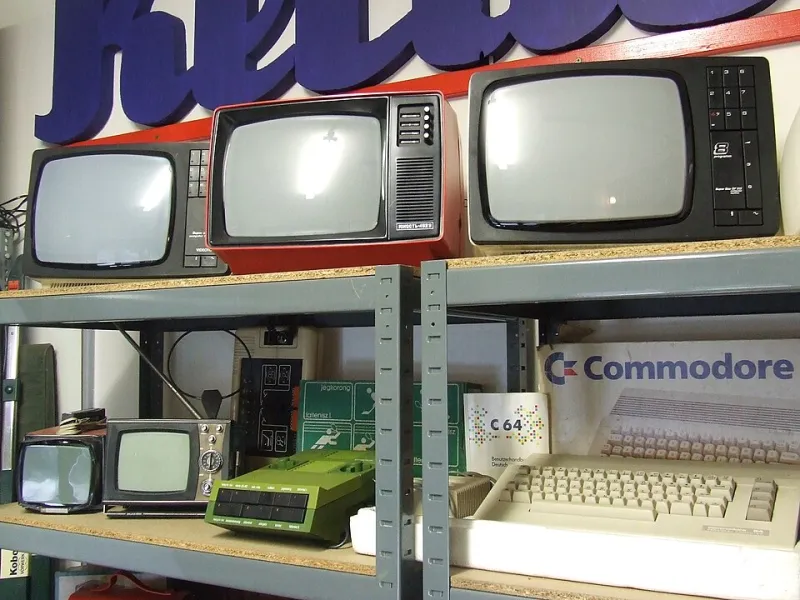
And then the test card: a static image, a grid, a girl with a clown. For hours. It was the visual equivalent of a busy signal. Yet entire generations can describe it from memory. That's the thing about closedown telly — it didn't need to try. It just had to be there, night after night, until one day it wasn't.
The 24-hour problem
As channels went round-the-clock, closedown disappeared. First the gaps shrank, then the epilogues were dropped, then the continuity voices were pre-recorded or replaced by menus. Now, if you leave a channel on overnight, you're more likely to meet a looped trailer or an infomercial than a human being saying goodnight.
That's not a complaint, exactly. Nobody wants to go back to a world with three channels and a test card. But something was lost. Closedown was a shared signal that the day had a shape. It told you when to stop. It was telly as a public service in the most literal sense: it ended.
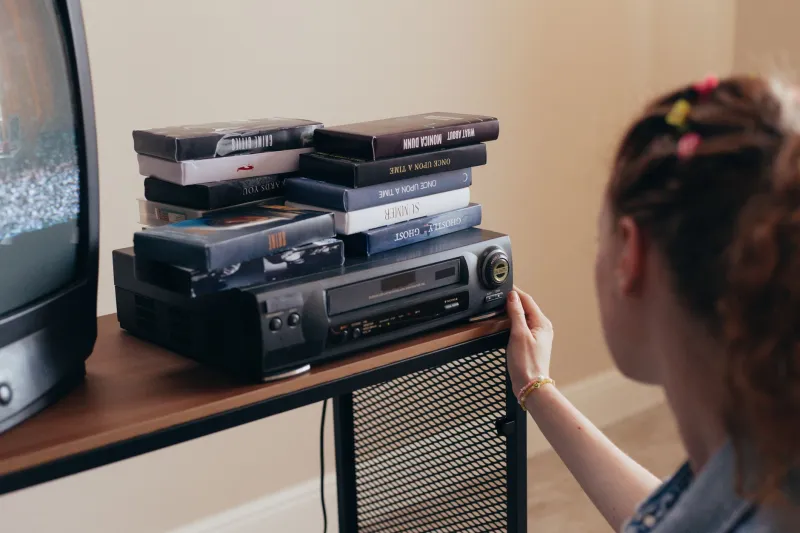
The loss isn't just nostalgic. It's archival. Epilogues, continuity links, regional goodnights and trade-test films were rarely kept. They were live, cheap and considered worthless. Many exist now only because a viewer happened to have a VHS recorder running, or because a regional station kept a tape in a cupboard and forgot to throw it out. The people who hunt these recordings — the skip-divers of the schedule — are doing genuinely important work. They're not just collecting telly. They're collecting the bits between the telly.
Why we still hunt the goodnights
On YouTube and in private archives, you can find fragments: a closedown from a Welsh transmitter, a continuity apology from the north-east, a trade-test film about bricks. They're grainy, wobbly, often incomplete. They're also weirdly moving. Not because they're good, but because they're gone.
There's a particular pleasure in watching a channel end for the night. It's the opposite of the endless scroll. It's a full stop. For anyone who loves lost shows, the closedown epilogue is the ultimate lost show: a programme that was never meant to be a programme, made by people whose names weren't credited, watched by millions who didn't really notice, and remembered by a stubborn few who did.
So here's to the last voice before bed. The apology for the missing picture. The epilogue that nobody asked for and nobody forgot. British telly used to say goodnight. Some of us are still listening.