Cancelled, Not Buried: The Fans Who Won't Let Britain's Axed Soaps Go Quiet
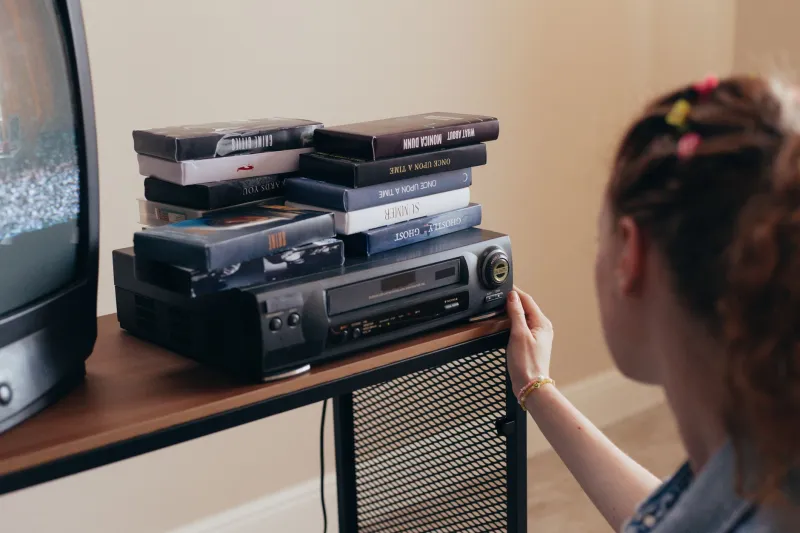
Every soap ends with a final episode. The credits roll, the pub quietly changes hands, and the production office is cleared. But in Britain, a cancelled serial has a habit of refusing to leave the building. Long after the schedules have moved on, fans are still passing round VHS rips, lobbying for repeats and arguing about that last cliffhanger. The result is a peculiar subculture: soaps that were once mass entertainment become boutique cult objects, watched by fewer people but with far more devotion.
The final episode is only the start
A live soap is a commitment. There are episodes to keep up with, storylines that stretch for months, and a nagging sense that you are always a week behind. A dead soap is different. It becomes a collection. You can watch it in order, skip the boring bits, and treat it like a boxset rather than a habit. That shift changes the way viewers relate to it. The stakes feel higher because every scene is now part of a finite archive. A character walking into the pub in 1998 is not just ordering a pint; they are doing it in a programme that no longer exists.
That is why axed soaps attract the same kind of attention as cancelled sci-fi or cult sitcoms. They become projects. Fans compile episode guides, track down missing broadcasts and swap recordings with the fervour of people preserving something fragile. The soap opera, once the most disposable form of television, turns into something closer to folk history.
Brookside: the close that kept reopening
Brookside is the obvious place to start. Channel 4's Liverpool serial ran from 1982 to 2003, and for much of that time it was the most talked-about soap on British television. It tackled subjects the others avoided — unemployment, drug addiction, domestic violence, the body under the patio — and it did so with a bluntness that made the Daily Mail reach for its fainting couch. When it was axed, it felt less like a cancellation and more like a neighbourhood being demolished.
But Brookside Close did not stay empty. Fans kept the show alive through forum threads, episode databases and the slow circulation of off-air recordings. The set itself became a strange tourist landmark for a certain kind of telly obsessive. And the show's absence from mainstream schedules only sharpened its reputation. Brookside is now remembered as a lost giant: too important to forget, too awkward to repeat. That combination is rocket fuel for cult status.
Family Affairs and the art of the quick exit
Family Affairs is a different case. Channel 5's nightly soap ran from 1997 to 2005 and was never treated as a heritage brand. It was a workhorse, churning out episodes at speed, and when it was cancelled it went quietly. But quiet cancellations often produce the most determined fans. Family Affairs had a habit of killing off characters in spectacular fashion — the Costello family's canal disaster is still a reference point for people who like their soap with a body count — and that gave it a memorable streak that outlasted its slot.
Online archives have done a lot of the heavy lifting here. Episodes surface on YouTube, clips get passed around, and new viewers discover a soap that feels strangely modern in its pacing. It is not nostalgia for a golden age; it is curiosity about a programme that was never allowed to become old-fashioned. Family Affairs did not get a victory lap. It got a secondhand afterlife, which may be more fitting.
Night and Day: the soap that forgot it was a soap
Night and Day was ITV's strangest soap experiment. Launched in 2001, it mixed conventional serial drama with dream sequences, flash-forwards and a title sequence that felt like a perfume advert. It was not built to last, and it did not. But its weirdness is exactly why people still talk about it. A cancelled soap that played it straight can be preserved as a time capsule. A cancelled soap that went surreal becomes a puzzle box.
Fans of Night and Day do not just want repeats; they want explanation. What was real? What was fantasy? Did the writers know where it was going? Those questions keep the show circulating in a way that a more conventional serial might not. It is the cult afterlife in its purest form: a programme that failed on television and succeeded as a rumour.
Why a dead soap becomes cult
There is a simple reason axed soaps develop this kind of following. They are finite, they are British, and they are full of faces you recognise from other things. A dead soap is a repertory company frozen in amber. You can watch a future EastEnders star cut their teeth, or spot an actor who later turned up in Doctor Who. That pleasure is not available in a soap that is still running, because the story keeps moving. The archive stays still.
There is also the campaign element. Fans of cancelled soaps often become accidental archivists. They write to broadcasters, start petitions, and ask for DVD releases that may never come. Sometimes they succeed. Crossroads, Eldorado and Brookside have all benefited from repeats, retrospectives and home-media curiosity at various points. Even when the campaigns fail, they keep the conversation going. A show with an active fan group is never entirely off the air.
What broadcasters lose when they pull the plug
It is easy to see cancellation as a scheduling decision. A soap underperforms, the advertising money moves elsewhere, and the plug gets pulled. But long-running serials are more than schedules. They are training grounds, social records and communal furniture. When a broadcaster kills one, it loses a piece of cultural infrastructure that cannot be replaced by a new show with a bigger marketing budget.
The cult afterlife is a consolation prize, but it is also a quiet rebuke. It shows that the audience was still there, just not in the numbers the spreadsheet demanded. Dead soaps do not stay dead because fans are sentimental. They stay dead because they are worth remembering. And in Britain, we have a long history of remembering telly that the schedulers would rather forget.