Beans, Banks and Borrowed Characters: The Ad-Break Afterlife of Axed Telly
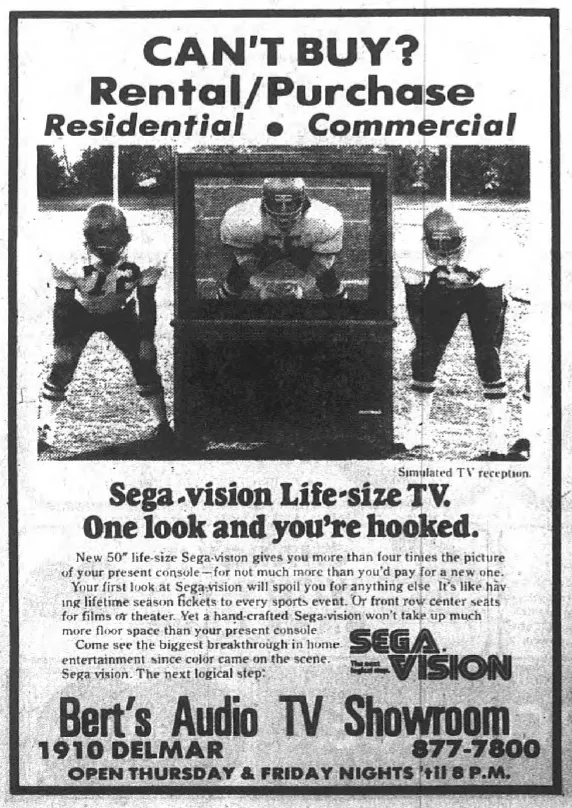
Photo: Bert's Audio TV Showroom, Public domain, via Wikimedia Commons
There is a specific kind of joy in clocking a cancelled show's character in a commercial. You're half-watching, not really paying attention, and then a voice you haven't heard since 1994 says something about oven chips and your brain does a small double-take.
For a certain generation of British telly fan, the ad break stopped being a chance to put the kettle on and became a scavenger hunt.
The advert as an unexpected green room
Think about what a cancellation actually means. The sets get struck, the costumes go into storage, the cast scatter into other work, and the show joins the great back catalogue in the sky. Except sometimes it doesn't.
Advertising has always had a magpie instinct, and telly's forgotten corners are a rich nest. A puppet that a generation grew up with is a recognisable face with none of the risk of a new character. A sitcom legend is shorthand for a whole set of warm associations, delivered in three seconds flat. Brands don't need you to remember the plots. They just need you to feel something familiar before the logo appears.
Which is why the likes of Sooty, Basil Brush and the Wombles have all, at various points, been drafted into selling things. These aren't obscure references either. They're shows that a lot of people under forty only know because of the adverts.
Nostalgia is cheaper than a new idea
From a marketing perspective, the appeal is obvious. You get instant affection, a built-in catchphrase, and a character your audience already trusts. You also get something harder to quantify: the sense of being let in on a joke.
That's the thing about casting a cult show in a commercial. It only really works if the viewer knows the reference, so the advert quietly flatters you for remembering. It says: this is for people who were there. That's a powerful trick, and it's been used over and over.
Occasionally it tips over into genuine event telly. A long-retired cast reassembling for a single advert is a proper little moment, and it tends to get written up as news rather than as marketing. Fans clip it, share it, argue about whether it counts as canon, and generally treat ninety seconds of advertising as a legitimate mini-episode.
Whether the performers regard it that way is another matter. For many, it's a job. For a few, it's clearly a chance to put the costume back on and have a laugh. Either way, the audience gets something the original show's ending never gave them: one more scene.
The strange archive value of a commercial
Here's the bit that doesn't get said often enough. Sometimes the advert break is the only place a piece of telly survives.
Original sets were scrapped. Puppets were destroyed or lost. Whole programmes were wiped. But the commercial that borrowed the character got copied, distributed and, crucially, kept. Advertising agencies and production houses retained their reels in a way that broadcasters famously didn't, and that material has since become a genuine research resource.
The History of Advertising Trust holds an enormous collection of British commercials, and enthusiast archives such as TV Ark have long treated adverts as part of the television record rather than a break from it. If you want to see a set that no longer exists, a costume that was binned in 1981, or an actor who died two decades ago doing the thing they were known for, the ad break is sometimes your only option.
That's an odd legacy for a thirty-second spot, but there it is. The thing nobody was supposed to care about outlasted the thing everybody was supposed to care about.
When the joke outlives the series
There's a melancholy little wrinkle in all this. A show can run for three series, get axed, and be completely forgotten in five years. Put the character in a commercial for a bank, though, and it enters a different kind of memory entirely. People who never watched the original will know the face. The catchphrase gets quoted by people who couldn't name a single episode.
The afterlife is louder than the life.
And yet, there's something quite lovely about it. These characters were built to be liked, and a cancellation doesn't switch that off. If a puppet that got axed in the eighties can still turn up in a supermarket advert and make a seven-year-old laugh, that's not a bad fate for something that was supposed to be finished.
Where to look for these ghosts
Keep an eye on Christmas campaigns, which love a nostalgia cameo. Keep an eye on anything selling food, insurance or broadband, since those categories seem to have the biggest budget for reassuring familiarity. And keep an eye on the fan forums, where somebody has invariably uploaded a wobbly off-air recording of an advert from 1993 with the caption 'anyone else remember this?'
They always do. That's the whole point. Telly forgets, but the ad break remembers.