House Lights Up: The Axed Sitcoms That Found a Second Act in Theatre
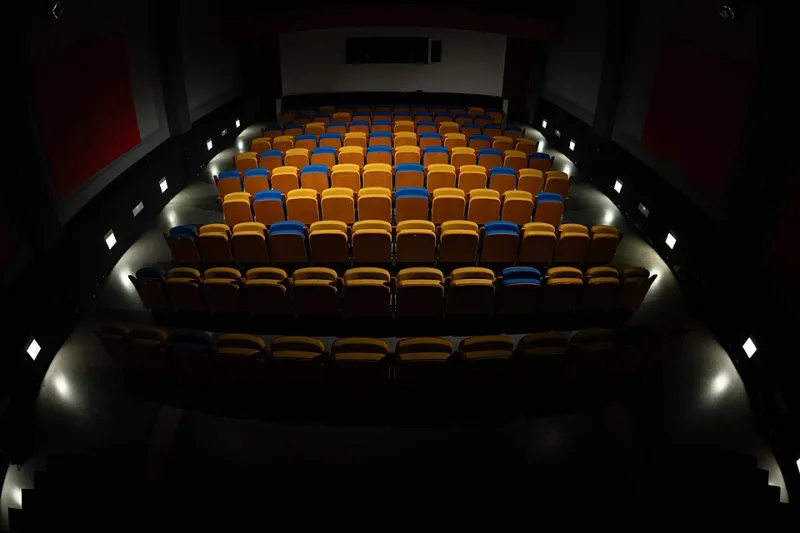
Photo: JJxFile, CC BY-SA 4.0, via Wikimedia Commons
There is a particular kind of silence that follows a cancelled sitcom. Not the silence of a punchline landing badly, but the silence of a door closing. The characters are left mid-argument, mid-misunderstanding, mid-life. The set is struck. The theme tune fades. And then, sometimes years later, a different kind of noise starts up: the rustle of a theatre programme, the creak of a seat, the low hum of an audience who have turned up to see people they thought they had lost.
Theatre has become one of the strangest and most effective afterlives for British telly. It is not quite revival, not quite reunion, and not quite preservation. It is a live, sweaty, imperfect second act — and for fans of axed shows, it can feel like a farewell that the broadcaster never bothered to give them.
Why the stage suits the cancelled sitcom
A sitcom is built for an audience. Even the ones that dropped the laughter track still rely on timing, reaction and the sense that someone, somewhere, is listening. Put those characters in a theatre and the logic is almost too neat. The laugh comes back. The pauses stretch out. The actors can feel the room respond in real time, which is something a closed set and a ratings report never quite provide.
The stage also offers something television rarely does: an ending. Cancelled shows are often denied closure. They stop because a controller moves on, a budget shrinks or a contract ends. A theatre run can give the characters a proper bow, even if the script has to bend around the fact that everyone is a little older and the world has moved on.
And there is the fan pilgrimage. A West End night out or a regional touring date turns watching into an event. You are not just rewatching old episodes on a streaming service that may or may not have the rights. You are in a room with other people who remember the same lines, the same gestures, the same deeply specific catchphrases. That shared memory is powerful. The show may be cancelled, but the audience is not.
Three routes from screen to stalls
The stage afterlife tends to arrive in one of three forms. The first is the full live version: familiar characters, new script, proper set, sometimes a tour. The second is the anniversary event or script-in-hand reading, where original cast members reunite and the pleasure is as much in watching them rediscover the material as in the material itself. The third is the adaptation, where a production company takes the premise and rebuilds it for theatre with a new cast and a slightly different tone.
Each route has its own risks. A full live version has to justify itself beyond nostalgia. A reading can feel like a lovely extra rather than a real show. An adaptation has to persuade an audience that the characters still belong to them, even when the faces have changed. Fans are not always forgiving about that. They know these people. They have heard every inflection. They can tell when a pause is half a beat too long.
The Bottom effect
One of the clearest examples of a cancelled telly show finding a loud, messy life on stage is Bottom. The television version ran for three series and a handful of specials in the early 1990s, with Rik Mayall and Adrian Edmondson as two flatmates locked in a cycle of violence and bad furniture. It did not exactly end with a neat resolution. It ended because the makers decided to stop, but for fans it was still a loss: two characters built for chaos were suddenly off the air.
The live shows changed that. Bottom Live and its sequels took the same crude, knockabout energy and put it in front of a theatre audience. The plots were thin, the violence was theatrical, and the laughs were enormous. Crucially, the stage versions did not pretend to be new episodes of the TV show. They were their own thing: a parallel canon, a chance to see the characters do what they always did, but louder and with no broadcaster to worry about.
That is the promise of the stage. It does not have to be canon. It does not have to be perfect. It just has to be live.
Recasting and the tribute problem
Not every stage afterlife can bring back the original cast. Some shows are adapted years after the fact, with new actors stepping into roles that remain vividly associated with specific performers. That can work, but it is a delicate business. A stage version of Some Mothers Do 'Ave 'Em, for example, took Frank Spencer's accident-prone world on tour with a new lead. The premise survived, but the performance had to walk a line between impersonation and interpretation.
When it goes wrong, it can feel like a tribute act. When it goes right, it can remind you what made the writing work in the first place. The best adaptations do not try to clone the original. They find the theatrical engine underneath: the farce, the misunderstandings, the social embarrassment, the sitcom rhythm that can survive a change of face.
The farewell the schedule never gave
There is a reason these shows keep coming back. Cancellation is rarely dignified. A programme can be pulled after a single series, moved around the schedule, or quietly dropped with no announcement. Fans are left with a box set and a Wikipedia entry. Theatre offers something closer to a wake: a date, a venue, a chance to gather.
That does not mean every axed sitcom deserves a stage show. It does not even mean every stage show is good. But the impulse behind them is revealing. We are not just asking for more episodes. We are asking for a shared ending. We want to sit in the dark with other people and hear the old rhythms one more time.
In 2026, with streaming catalogues constantly shifting and old shows disappearing from view, that impulse makes even more sense. A theatre ticket is not a permanent archive. The performance will vanish after the run. But for a few hours, the cancelled show is not lost. It is right there, in the room, waiting for the laugh.
And that, for a site like Lost Shows, is the point. The stage does not preserve television. It revives the feeling of watching it together — and sometimes that is the closest thing to a second life an axed sitcom will ever get.