Tune In Tomorrow: The Vanished Trailers That Sold Us Telly We Never Got
There was a time, not so long ago, when British telly was its own best hype man. Before streaming autoplay and algorithmic 'because you watched', there was the humble next-week trailer: fifteen or thirty seconds of breathless montage, a continuity announcer leaning into the microphone, and a promise that next Tuesday would be worth staying in for. ## The Thirty-Second Sell
These weren't just adverts for shows. They were adverts for the future of telly — a little ritual of anticipation that glued the schedule together. BBC continuity announcers would slip in a teaser after the credits of a drama, their voice dropping into that familiar, slightly conspiratorial tone: 'Next week, a face from the past returns…' Over on ITV, you'd get a rapid-fire end-credit promo, often shoved into a split-screen while the cast list rolled, urging you not to touch that dial.
For cult and cancelled shows, these trailers were often the first — and sometimes only — glimpse of what was coming. A monster not yet seen. A character's fate teased in three frames. A cliffhanger resolution that would eventually arrive, but not before a week of playground speculation.
The Scenes That Never Made It to Air
Here's where it gets properly interesting for telly archaeologists. Next-week trailers were cut fast, often from rough assemblies or episodes that were still being finished. Sometimes the footage you saw in the trailer never actually made it into the broadcast episode. A shot of a character in a location that got trimmed. A line of dialogue later redubbed. An entire beat of action that ended up on the cutting room floor because the episode ran long.
That means those tiny trailer fragments aren't just marketing — they're evidence. They're moving-image documents of a version of the show that briefly existed and then vanished. Fans of cancelled British sci-fi and cult drama have spent years comparing off-air trailer recordings with the episodes themselves, noting the differences. A trailer for a late-1970s serial might show a monster suit in a lighting setup that was never used. A 1980s comedy teaser might include a gag that was cut after the studio recording.
The trailer, in other words, sometimes preserved the show better than the show preserved itself.
The VHS Time Capsule
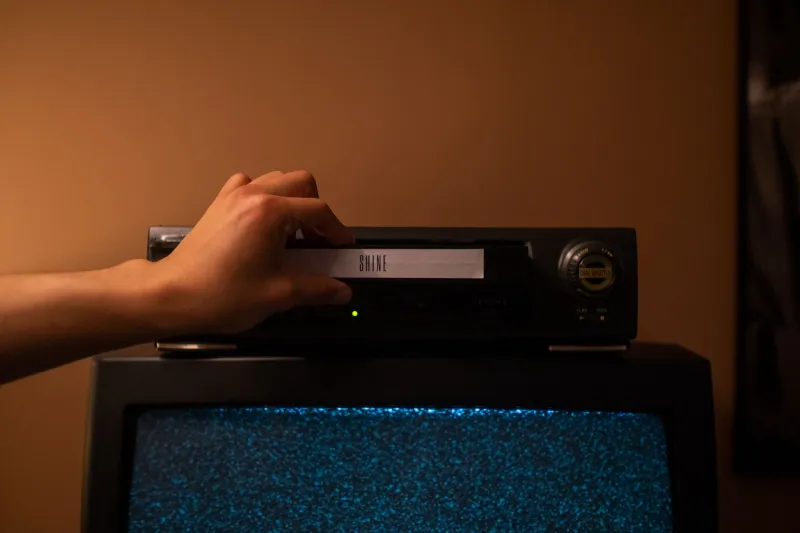
Most of these trailers were never archived. They were ephemeral by design — broadcast once, between programmes, then wiped or taped over. The only reason we have any of them at all is because ordinary viewers left their VCRs running. Off-air VHS collections, often recorded by fans who couldn't bear to miss a single frame, have become the de facto national archive for this stuff.
Those tapes are now doing the work that institutions didn't. Preservationists have spent years digitising wobbly, tracking-error-riddled recordings of continuity links, end-credit promos, and 'next time' teasers. The quality is often dreadful. The audio wobbles. The colour bleeds. But the content is irreplaceable.
And there's a particular poignancy to trailers for shows that were cancelled before their time. You'll find a breathless ITV promo promising 'next week, the truth about the crash' for a drama that never got a second series. Or a BBC teaser for a serial that was pulled from the schedule and never rescheduled. The trailer is selling a future that never arrived — a ghost of a schedule that existed only in that thirty-second burst.
Why They Still Matter
Next-week trailers tell us something about how telly used to think about itself. They assumed loyalty. They assumed you'd be back. They assumed that a week was a reasonable amount of time to wait for a resolution. They were part of a paternalistic, schedule-driven broadcasting culture that has largely evaporated in the on-demand era.
They also remind us that the way we sell telly shapes what we remember. A great trailer could make a mediocre episode feel like event television. A bad one could bury a cult classic before it found its audience. And when a show was cancelled, the trailer became a strange kind of memorial: the last time anyone spoke about it in the future tense.
So next time you're watching an old episode on a streaming service, spare a thought for the thirty seconds that used to follow it. Somewhere on a shelf, on a dusty VHS cassette, a continuity announcer is still promising you next week. For a show that's never coming back.