Behind the Play Button: The Cult UK Telly Stranded in DVD Menu Backstreets

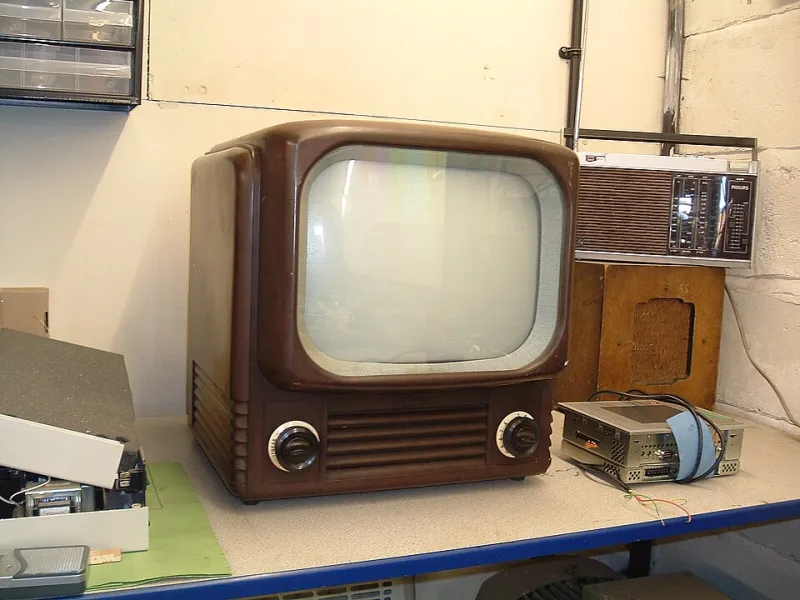
Photo: dave peck, CC BY-SA 2.0, via Wikimedia Commons
In 2026, it is easier to summon a decade-old American drama than a British comedy that was on BBC Two when you were eleven. Search hard enough and you will find a trailer, a clip, a Radio Times listing scanned by a stranger. What you will not always find is the show itself. But open the right old DVD case, press Up, Left, Left, Select, and there it is: a fragment of telly that never made it to the menu.
Easter eggs are usually treated as a bit of fun. A gag reel, a hidden trailer, a jokey commentary from a cast member who has since become a national treasure. For lost and cancelled UK programmes, though, they are something stranger. They are accidental archives. A place where deleted scenes, abandoned title sequences and odd little continuity bits have survived because a DVD author had a spare afternoon and a mischievous streak.
The menu as a filing cabinet
DVDs were never a tidy medium. A label would license a series, cram the episodes onto discs, then discover there was space left over. Sometimes that space went on a photo gallery nobody asked for. Sometimes it went on a commentary that was recorded but never advertised. Sometimes it went on a clip that had been cleared for the release but not for the main menu, so it was tucked away behind a logo or a fake button.
For shows that have since fallen off streaming or never made it there in the first place, those leftovers matter. A cancelled sitcom might be unavailable in full, but its DVD could still hold an alternative pilot, a cast reunion shot for a magazine, or a sketch that was cut before transmission. A cult drama might have vanished from repeats, yet its disc still carries a PDF script, a set of production stills or a hidden interview with a writer who is no longer with us.
The names behind these discs are worth remembering. Network, the label that did so much for archive British telly before closing in 2023, was famous among fans for releasing material that felt almost too thorough: scripts, PDFs, unadvertised commentaries, odd bits of continuity. 2 Entertain, Simply Media and the BFI have all, in different ways, put out releases where the extras were as valuable as the episodes. Not every hidden feature is a lost masterpiece. Some are just a camera test or a man in a foam suit waving at a wall. But in the context of British telly history, even that can feel like treasure.
The fans who press the right arrows
The discovery of these things has always been a group effort. In the 2000s it was forums and fan sites, people comparing notes on which menu screen hid which clip. Now it is Discord servers, subreddits and sprawling wiki pages, alongside the older, stubborn business of buying discs from charity shops and car boot sales. Someone finds a Region 2 release for 50p, takes it home, and starts pressing buttons.
There is a particular kind of joy in finding a hidden extra on a show that nobody is talking about. It is not the same as unearthing a missing Doctor Who episode. It is smaller and odder: a five-second clip of a continuity announcer, an unused end title, a deleted scene that explains a plot hole nobody had noticed. Fans document these finds with the seriousness of archaeologists and the tone of people who have just found a fiver down the back of the sofa.
The menu maps matter. Without them, the extras are effectively invisible. A hidden commentary is not much use if the only person who knows about it has stopped updating their Angelfire page. Preservation is not just about keeping the tape. It is about keeping the instructions.
What gets buried, and why
Not every Easter egg is buried for mysterious reasons. Sometimes the extra was unfinished. Sometimes the commentary was recorded for a different release and left on the shelf. Sometimes a music cue or a clip was cleared for the episode but not for a standalone feature, so it was hidden rather than cut. And sometimes, let us be honest, a DVD producer just thought it would be funny to make people press the number 7 on a menu screen.
That last reason is part of the charm. British telly has always had a streak of mischief in it, and DVD menus were one of the last places it could be exercised without a scheduler interfering. But the consequence is that some of the most fragile material in a show's history sits behind a button labelled 'Scene Selection'.
The rights situation is the usual tangle. A DVD release might have been cleared for a fixed period. The label might have gone under. The production company might have changed hands. The writer's estate might have questions. In 2026, with streaming catalogues pruning older titles and physical media increasingly niche, a hidden extra on a 2004 disc can be the only commercially available version of a scene. That is not a sensible archive. It is a cupboard.
The accidental archive problem
DVDs do not last forever. Disc rot, scratches, charity-shop sunlight and the slow disappearance of players with a SCART socket all take their toll. Laptops no longer have disc drives. The people who know the menu codes are not getting younger. And the labels that made the discs are either gone or no longer interested in the back catalogue.
This is where the fan work becomes preservation by default. People rip their own discs, catalogue the extras, compare different editions and note which menu hides what. None of it is glamorous. It is the televisual equivalent of tidying a shed. But it is the reason a deleted scene from a cancelled comedy can still be watched by someone who was not born when the DVD came out.
There is a lesson here for the bigger archives too. If a show is not on streaming, not repeated and not commercially available, the fragments matter more than they should. A hidden clip can tell you how a title sequence changed, how a channel promoted a series, how a cast member sounded before the show broke big. These are not footnotes. They are the texture of British telly history.
Check the old discs
So the next time you see a dusty DVD of a show that has vanished from every platform, do not dismiss it. Put it in, wait for the menu, and try pressing the arrows in a stupid order. You might find a commentary nobody has mentioned for twenty years. You might find a deleted scene that changes how a character reads. You might find a thirty-second trailer for a series that otherwise exists only as a listing in a newspaper.
It is not a proper archive, and it never will be. But it is what we have: a secret shelf behind the play button, holding the bits of British telly that were too odd, too unfinished or too legally awkward to put on the front page. Pressed but hidden, yes. Still there, if you know where to look.