The Vanishing Act: Live British Television and the Recording That Never Happened
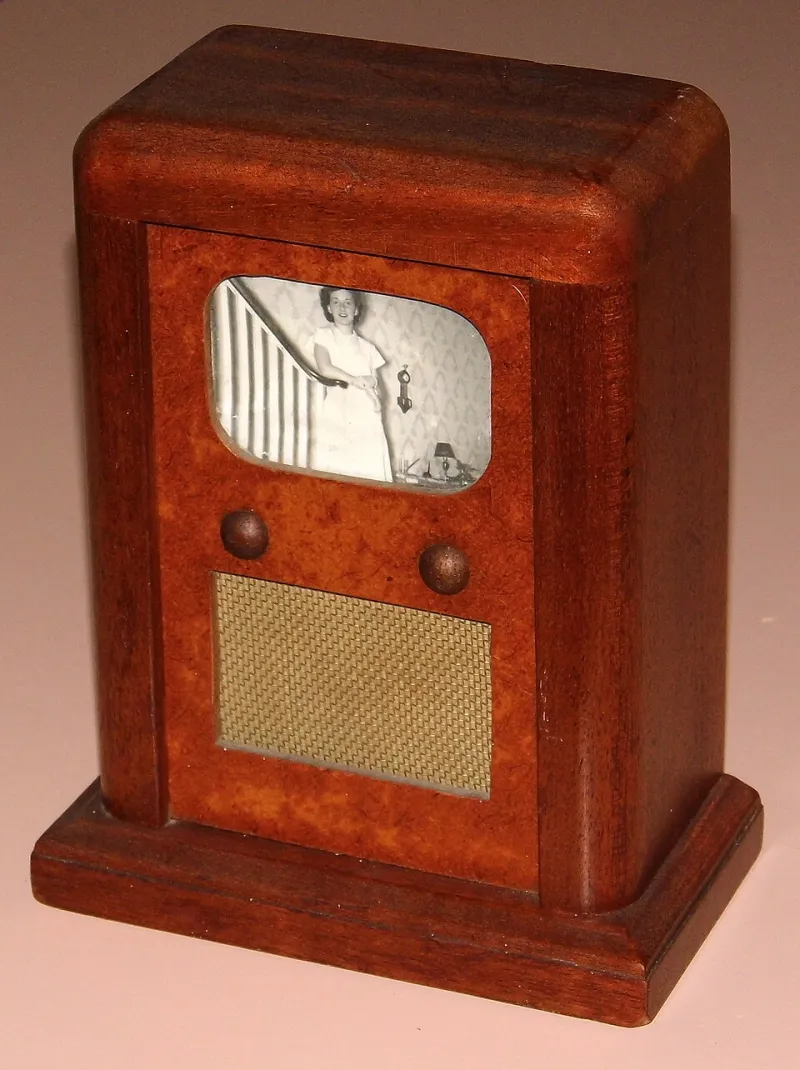
Photo: Joe Haupt from USA, CC BY-SA 2.0, via Wikimedia Commons
Some lost telly is a gap on a shelf. Some is a gap in the schedule. And some is a gap in the air itself. You can hunt for a wiped videotape, lobby a rights holder, or trawl a foreign archive for a stray copy. But what do you do with a programme that was never recorded in the first place?
That is the strange, haunting corner of British television history occupied by the live broadcast. Not the live episode as a modern stunt, with a bank of recorders running and a clip ready for the news. The older kind: a performance that existed for its slot, for its audience, for the length of its running time, and then stopped existing. No master tape. No repeat. No DVD extra. Just the memory of everyone who happened to be sitting in front of the set.
A medium built to disappear
In the early decades of British television, live was not a novelty. It was the default. A studio, a cast, a set, a gallery full of people counting down, and a signal going out once. The BBC and the early ITV companies built their schedules around the idea that television was a kind of theatre delivered by aerial. You rehearsed, you performed, you went home. Next week, something else.
Recording existed, but it was not automatic. Telerecording, the process of pointing a film camera at a television monitor, could preserve a live transmission, but it was not always used and the results could be rough. Videotape arrived later and was expensive enough to make programme makers think hard about what deserved a reel. In a culture where the broadcast was the product, keeping a copy was not always the priority. The show had already been delivered. Why keep the wrapping?
That logic sounds alien now. Today, when every live broadcast is likely to be captured by multiple systems and clipped within minutes, the idea of letting a programme go out with no safety net feels almost reckless. But for a long stretch of UK telly, it was simply the way things worked.
The anthology play: theatre with no stage door
The live anthology drama is perhaps the purest example. The 1950s and 1960s were full of one-off plays, often performed live in the studio, often cast with actors who could handle a long take and a camera cue. These were not series in the modern sense. They were events. A new play one week, a different one the next, each with its own sets, its own mood, its own brief life.
Many of those plays survive only as scripts, camera plans, press releases and reviews. A few were telerecorded. Many were not. The result is a whole strand of British drama that can be read in the archives but not watched on a screen. You can find the cast list. You can find a newspaper critic arguing about the ending. You can find a still of a living room set, lit for a camera that has long since been switched off. What you cannot find is the performance itself.
That absence is different from a wiped tape. A wiped tape is a tragedy of reuse. A live play that was never recorded is a tragedy of assumption: nobody thought it needed saving because nobody thought of it as an object. It was a broadcast, not a possession.
Soaps before the safety net
Early British serials and soaps also lived on the edge of the live studio. The idea of a continuing drama going out live is almost impossible to imagine now, with our multi-camera setups and instant online reaction. But for a period, it was normal. Actors learned pages of dialogue, hit marks, avoided furniture, and delivered the episode in one go. If a line went wrong, it went wrong in front of the nation. If a prop failed, the audience saw it.
Some of those episodes were telerecorded and survive. Many do not. The lost ones leave behind plot summaries, cast lists, and the memories of viewers who can still recall a particular row in a particular kitchen. There is something especially odd about losing a soap episode, because soaps are built on continuity. The missing instalment is not just a missing hour of telly. It is a hole in the story of a street or a hospital or a family that the audience was following week by week.
Variety, spectacle and the tightrope
The same disposable logic applied to Saturday-night entertainment. Live variety shows, musical spectaculars, big-format games and specials all relied on the thrill of the unrepeatable. Part of the appeal was that anything could happen. A guest could fluff a line. A set could wobble. A host could go off-script. The audience at home was watching something that was happening now, not something that had been safely packaged.
When those shows were not recorded, the thrill becomes the loss. The very quality that made them exciting, their liveness, is what makes them impossible to revisit. You are left with listings, photographs, maybe a newspaper sketch, and a sense of an evening that once felt enormous and now exists only as a date in a TV guide.
The fragments we do have
Preservation for this kind of telly looks different. You are not searching for a missing reel so much as collecting evidence. Scripts held in archives. Camera scripts with pencil marks. Stills taken for publicity. Reviews that describe the pace, the performances, the set. Occasionally, an off-air audio recording made by a viewer with a reel-to-reel machine and a hopeful microphone. These fragments do not add up to the programme, but they add up to a shape of it.
Then there is memory. Viewer recollections are not a substitute for a recording, but they are part of the record. The person who remembers a live drama because their mother gasped at the ending. The person who remembers a Saturday-night host ad-libbing after a prop collapsed. These are not trivial. They are how a vanished broadcast stays in circulation.
Why it haunts differently
A wiped tape haunts us because we know it existed as a physical thing. There is a master somewhere, or there was, and someone made a decision. A live broadcast that was never recorded haunts us because there is no master to find. The event was the master. The transmission was the only copy.
That makes it a uniquely pure kind of lost telly. You cannot campaign for its return. You cannot hope for a dusty can in a foreign vault. You can only document it, describe it, and accept that some of television's most alive moments were also its most temporary. In the end, that is preservation too: not getting the pictures back, but making sure we remember what was there.