Mouths Moving, No Sound: Britain's Mute TV Survivors
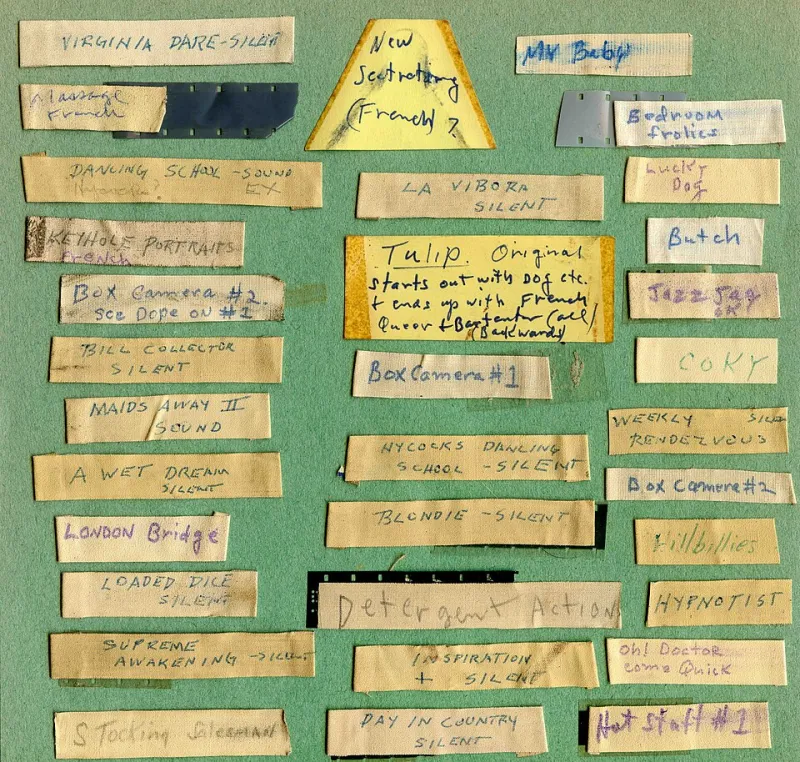
Photo: Danielteolijr, CC BY-SA 4.0, via Wikimedia Commons
There is a special kind of television ghost in the archives. It isn't missing. It hasn't been wiped. It sits on a shelf, fully visible, and yet it feels half gone. The picture rolls, the actors move, the cameras prowl, and absolutely nothing comes out. These are Britain's mute TV survivors: programmes that exist today only as silent telerecordings or film transfers, with no voices, no music and no laughter to tell us what they actually sounded like.
For anyone used to hunting down lost telly, these shows are a strange kind of consolation prize. We can see them. We just can't hear them. And that gap between picture and sound turns out to be one of the most revealing stories in British television preservation.
The Split That Made the Silence
In the early decades of UK television, picture and sound were not always married for life. Telerecording — pointing a film camera at a television monitor to capture what was going out live — often treated the two elements as separate jobs. The image might be recorded on 16mm film while the audio ran off elsewhere: a separate magnetic track, an optical soundtrack, a disc, or a tape that was later reused because storage was expensive and nobody thought the programme would matter in fifty years.
Sometimes the sound simply wasn't attached to the print that survived. Sometimes it was recorded but not kept. Sometimes the audio was there and then quietly disappeared during a later transfer, when a mute print was all that got duplicated and passed around. The result is a category of surviving television that archivists call by various technical names but fans know more simply: the silent ones.
What makes them eerie is how close they are to being complete. A missing episode is an absence. A mute episode is a presence with a hole in it. You can watch a comedian's shoulders shake and have no idea what the joke was. You can see a band going at it and hear nothing but the projector in your head.
Comedy Without the Punchline
Silent comedy is where the loss bites hardest. British telly has always run on timing, pause and the sound of an audience deciding whether to laugh. Strip that away and you get a strange pantomime: mouths opening and closing, eyebrows doing all the work, a cast waiting for a reaction that never arrives.
Fans and researchers have spent years trying to fill those gaps. Some lip-read. Some compare surviving scripts, camera scripts and rehearsal notes. Some match a mute sequence to a later remake, a radio adaptation or a foreign broadcast that kept its soundtrack. Music cue sheets can tell you what was playing, though not how it sounded in the studio. Continuity announcers' links, off-air audio recordings and even subtitles from overseas transmissions have all been used to build a partial voice for shows that otherwise sit in silence.
The results are rarely perfect. A reconstructed soundtrack is a collage of evidence, not a resurrection. But it can turn a baffling silent film into something recognisably like television again — a joke lands, a song makes sense, a pause stops feeling like a technical fault.
The People Who Listen Harder
Archive teams don't treat mute prints as dead ends. They treat them as witnesses. A silent recording can still confirm a set design, a costume, a cast member nobody had listed, or the exact way a title sequence moved. It can prove a programme was broadcast when the paperwork says otherwise. It can show a performance that no audio-only recording could ever capture.
Then there are the enthusiasts. The lip-readers who volunteer their eyes. The collectors who notice that a 16mm print marked 'mute' is the same episode as a crackly audio reel held somewhere else. The fan projects that sync sound to picture with more patience than most broadcasters can afford. They are doing the work of reuniting two halves of a programme that were separated by accident, economy or carelessness decades ago.
It is slow, unglamorous preservation. Nobody gets a plaque for matching a three-second laugh to a shot of a studio audience. But every match makes the archive a little less silent.
What the Silence Tells Us
These mute survivors are also a reminder of how casually television history was handled. Sound was heavy. Tape was expensive. Film was bulky. If a recording only needed to prove that a programme had gone out, or if a print was kept for reference rather than repeat, the audio might be treated as optional. Nobody was thinking about 2026 viewers peering at a mouth moving in a 1960s studio.
That is the odd gift of these shows. They don't pretend the archive is complete. They show us exactly where the seams are. A silent print is television with its voice removed, and in that removal we can see the practical decisions that shaped what survived. The picture was worth keeping. The sound, apparently, was not.
At Lost Shows, we usually chase the programmes that disappeared. The mute ones ask a different question: what do you do with a show that is still here but can't speak? You watch it closely. You read the lips. You hunt for the missing reel. And you accept that some voices are gone for good, leaving only the faces to finish the sentence.
The silence isn't the end of the story. It's the part of the story we have to learn to hear around.