The Foreign Vaults: How Overseas Broadcasters Became Britain's Accidental TV Archive
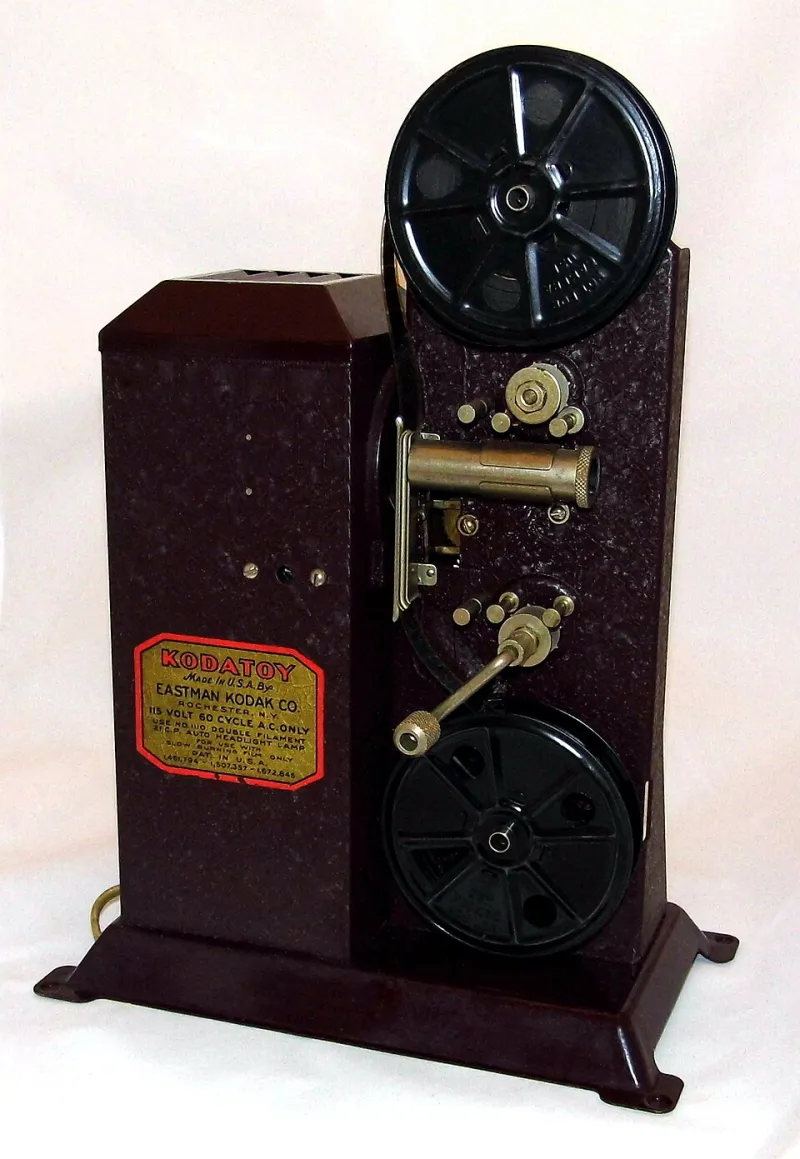
Photo: Joe Haupt from USA, CC BY 2.0, via Wikimedia Commons
British telly has a habit of surviving in the wrong place. A master tape gets wiped, a film print goes missing, a storage unit is cleared, and yet decades later an episode turns up in a broadcaster's basement on the other side of the world. It is not a tidy preservation strategy. It is more like a global game of pass-the-parcel, played with 16mm film and magnetic tape, where the UK often lost track of what it had sent abroad.
The canister that shouldn't exist
The classic rediscovery story starts with something unglamorous: a film can with a faded label. It might name a British distributor, a foreign broadcaster, or just a programme title in a language nobody in the room speaks. Inside is a sales print of a show that no longer exists in the UK in any broadcastable form. The domestic master was wiped, binned, or simply not kept. The overseas copy was never meant to be an archive master. It was a shop copy, a transmission print, a piece of television furniture shipped out to earn a few pounds.
That is the strange irony at the heart of it. The prints that survive often survive because they were considered disposable abroad as well. They were screened, spliced, stored badly, forgotten, and then left alone. Neglect is not preservation, but sometimes it is the next best thing.
How a sales print worked
In the 1960s and 1970s, British broadcasters and distributors sold programmes overseas with enthusiasm. A telerecording would be struck to film, packed into cans, and sent to Australia, New Zealand, Canada, Nigeria, Hong Kong, the Caribbean, and anywhere else that wanted English-language telly with a familiar accent. These prints were practical objects. They might carry foreign-language subtitles, dubbed audio, local censor cuts, or clumsy edits made for a different schedule. They were not sacred texts.
That practicality is exactly why they matter. A sales print can preserve a version of a programme that the UK archive no longer holds, even if it is a slightly battered one. Sometimes the picture is soft. Sometimes a reel is missing. Sometimes the audio is in German. But a flawed copy is still a copy, and in the world of missing television, that is the difference between a listing in a reference book and an episode you can actually watch.
The accidental global safety net
The overseas archive never set out to rescue British television. It was just doing its job. Commonwealth broadcasters held onto material for their own repeats and rights reasons. National archives kept what they thought was worth keeping. Private collectors kept what they loved. By the time UK archivists started looking seriously for missing shows, the trail often led abroad not because anyone had planned it, but because someone had not got round to throwing the can away.
This is why the story of lost UK telly is not purely a British story. It is a story about distribution. A programme sold to a broadcaster in Sydney or Lagos might outlive its own country of origin. A fan in Canada with a early video recorder might capture something that the UK broadcaster had already decided was not worth the tape. An overseas transmission might preserve a closing credit sequence, a continuity announcement, or a version of a theme tune that domestic viewers never heard.
The awkward bureaucracy of rescue
Finding a print is only the beginning. The fantasy is that someone opens a cupboard, finds the missing episode, and everyone celebrates. The reality involves rights, ownership, condition reports, restoration budgets, and a lot of careful conversation. Who owns the print? Does the overseas broadcaster want to keep it? Can it be loaned or copied? Is the film shrunken, warped, or suffering from vinegar syndrome? Does the audio survive? Was the print cut by a local censor in a way that makes it historically interesting but commercially awkward?
There is also the question of what counts as rescued. A recovered episode may be complete, partial, mute, badly damaged, or only available as an off-air audio recording. Fans often know the significance before the institutions do. Archivists know the logistics. The best rediscoveries happen when both sides talk to each other without turning it into a treasure hunt versus bureaucracy pantomime.
What rediscovery looks like in 2026
The mood around archive television has changed. In 2026, rediscovery is less about a single miracle find and more about patient work: cataloguing, digitisation, comparing versions, and building relationships with archives that never saw themselves as part of British TV history. The British Film Institute, the Missing Believed Wiped events, fan groups and specialist collectors all play a part, but so do the foreign broadcasters who still hold material in their own vaults.
It is also not just about the famous missing episodes. Cult drama, children's telly, music shows, regional ITV material and one-off plays all benefited from overseas sales. Some of the most interesting recoveries are not the ones that make headlines, but the ones that fill in a gap in a schedule, a career, or a genre. A surviving sales print can tell us how a show was sold, how it was cut, and how it was understood by audiences far from the UK.
The next canister
The accidental global safety net is still out there. Somewhere, in a broadcaster's storeroom or a collector's shed, there is probably a can with a British title on it and no one quite sure what to do with it. The lesson of the foreign vaults is not that we should rely on luck. It is that British television history has always been international, whether the UK archive likes it or not. If we want to keep rediscovering lost telly, we need to keep looking abroad, asking politely, and treating every battered sales print as a possible piece of the picture.