Made, Paid For, Pulled: Britain's Unbroadcast Television
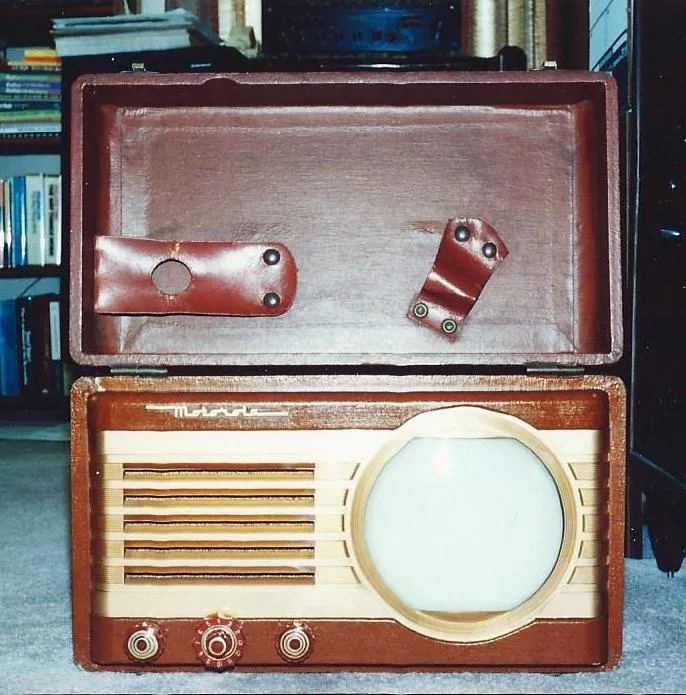
Photo: Joe Haupt from USA, CC BY-SA 2.0, via Wikimedia Commons
There's a particular kind of lost show that doesn't get talked about nearly enough. It isn't missing. Nobody taped over it, nobody binned the reels, nobody's hunting car boot sales for a wobbly VHS with a handwritten label. It exists, in full, in colour, with a finished title sequence and a mix that was signed off by somebody senior. It just never made it to your telly.
That's a stranger sort of loss, in a way. A wiped episode is a hole. An unbroadcast one is a door that was built, painted and then bricked up.
The tape exists. That's the odd part
Most conversations about TV preservation in the UK revolve around the great wiping years, when videotape was expensive and nobody imagined anyone would want to watch a 1967 sitcom again. Fair enough. But there's a parallel history of shows that survived perfectly well and simply never got the slot.
Sometimes it's a single episode pulled at the last minute. Sometimes it's a whole series. Occasionally it's a finished pilot that a channel commissioned, paid for, watched, and then quietly filed under 'not for us'. No announcement, no explanation, no DVD extra. Just a gap in the paperwork where the transmission date should be.
The frustrating thing is that these shows leave ghosts. A listing in a magazine that went to press too early. A photo caption in a press pack. A mention in a trade paper confirming a start date that never arrived. An actor's CV with a credit for something no licence fee payer ever saw. Fans have reconstructed entire productions out of that kind of debris.
Why broadcasters get cold feet
There's no single reason, which is part of what makes the subject so slippery.
Politics is the big one. The BBC's The War Game, made for television in 1965, was deemed too harrowing for broadcast and spent two decades in the vaults before finally airing in 1985. Brimstone and Treacle, Dennis Potter's queasy 1976 Play for Today, was pulled before transmission and didn't reach audiences until 1987. Ian Curteis's The Falklands Play was written in the mid-eighties and waited until 2002. In each case, the tape was fine. The nerve was the problem.
Then there's the legal sort. A completed show can be parked because of a rights dispute, a contributor withdrawing consent, a libel worry, or a contract that didn't quite cover the thing everyone later realised it needed to cover. Nobody wants to be the person who signs off on a lawsuit, so the show goes in the drawer and the drawer gets forgotten.
And then there's plain old scheduling cowardice. A channel changes controller, the new broom doesn't fancy the old broom's project, and a finished six-part drama becomes an embarrassment rather than an asset. Cheaper to bury it than to explain it.
The paper trail is the show
For a programme with no transmission, the archive becomes the only viewing. Except you can't view it. So the research becomes its own kind of telly.
Fans work from the ephemera. Copies of Radio Times and TV Times where a billing slipped through. TV listings in local papers, which often ran on different deadlines and caught schedules that changed late. Press packs sent out to journalists ahead of a launch that got cancelled. Newspaper previews written by critics who'd been given a preview tape and then had to file something anyway.
The BFI's collections and the work of enthusiast archivists have pulled a lot of this into the light, and organisations such as Kaleidoscope have spent decades documenting programmes that exist but were never aired. It's painstaking, unglamorous work, and it's the only reason some of these titles are anything more than a rumour.
Streaming hasn't solved it. It's made more of it.
You'd think the endless appetite for content would have ended the practice. It hasn't. If anything, the modern era has industrialised the shelving.
Completed series now get parked for reasons that would have baffled a 1970s scheduler: a platform pivot, a tax decision, a merger, a brand-safety wobble, an executive who left and took the enthusiasm with them. In the UK we've also seen finished material held back over contributor concerns or sensitivity reviews, sometimes permanently, sometimes for years.
The difference is that there's no equivalent of a listings magazine going to press with a start date, so the paper trail is thinner. A trailer might leak. A poster might appear on a bus. A cast member might mention it in an interview and then never mention it again. Then silence.
What to look out for
If you want to go digging, start with oddities in the record. A credit on IMDb with no transmission date. A production company page listing a show that never appeared in a schedule. A photograph of a set nobody recognises. Comments under an old forum thread from someone who says their dad worked on it.
And be kind to the people who remember. Somebody's mum was in the crowd. Somebody's mate did the props. These shows were real working weeks for real people, and for most of them the only broadcast was a screening in a Soho basement with warm white wine and a few nervy executives.
Lost to the skip is one thing. Lost to the schedule is somehow more British: done properly, signed off, and then never spoken of again.